Online Maths Tuition for Classes 1–8
Live 1-on-1 maths classes that follow your child's own school syllabus — CBSE, ICSE or State Board — with a free trial before you commit.
Format
Live 1-on-1 on Zoom
Session
60 minutes
Frequency
2 classes / week
Classes
1–8
Online maths tuition that follows your child's syllabus
This is not a parallel maths course competing with school for your child's attention. Sessions work through the syllabus your child is actually being taught — the same chapter, the same notation, the same question formats their teacher sets — so the tuition reinforces school rather than adding a second thing to keep up with. Whether that syllabus is CBSE, ICSE or a State Board is established in the first session, and the practice material is matched to it.
Why children fall behind in maths, and what fixes it
Maths is unusually unforgiving about gaps. A child who never quite settled fractions in Class 5 will struggle with ratios in Class 6 and algebra in Class 7, and by then the visible problem is algebra while the actual problem is three years upstream. Group tuition rarely catches this, because the class has to move at the syllabus's pace. A 1-on-1 session can stop, go back, close the specific gap, and then return — which is usually the difference between a child who is behind and a child who is fine.
What a session actually looks like
Your child works problems live while Nupur watches — not passively listening to worked examples. That matters, because the useful information is in how a child approaches a problem: where they hesitate, which step they skip, what they guess at. Corrections happen at the point of error rather than after a submitted worksheet, and the following session's practice is built around whatever came up.
Exam preparation, not just topic coverage
Knowing the method and scoring well are different skills. Alongside the syllabus, sessions cover the mechanics that decide marks: setting out working so an examiner can follow it, managing time across a paper, checking answers quickly enough to actually do it, and recognising the question types that reliably cost marks. The final module is built entirely around mock tests and targeted revision.
Designed for Real Results
Students in Grades 1 to 8 who want to strengthen fundamentals, keep pace with school, or get ahead of their class through structured concept-based learning.
Master the full school syllabus with deep conceptual clarity
Excel in school exams through structured practice and revision
Build strong problem-solving skills for lifelong math confidence
Curriculum
What Your Child Will Learn
6 core modules covering the complete syllabus for Grades 1–8 — taught through live interactive sessions.
Number System & Operations
Place value, whole numbers, integers, fractions, decimals, and all four operations
Algebra
Expressions, equations, identities, patterns, and variables
Geometry & Mensuration
Shapes, angles, area, perimeter, volume — 2D and 3D
Ratios, Percentages & Proportions
Profit & loss, discounts, simple interest, and proportional reasoning
Data Handling & Statistics
Bar graphs, pie charts, mean, median, mode, and probability
Exam Strategy & Review
Mock tests, time management, common mistake patterns, and targeted revision
How the Classes Work
Live Online Classes
2 interactive sessions per week with Nupur Chattopadhyay. Students see, hear, and solve problems in real-time — just like a physical classroom, but from home.
Practice & Feedback
Targeted worksheets after every class. Nupur personally reviews progress and gives individual feedback to every student.
Track & Improve
Regular assessments track progress. Parents get updates on strengths, improvement areas, and exam readiness.
Interested in this course for your child?
Try a live class free — no payment, no obligation. See the teaching style before you decide.
- ✓ CBSE, ICSE & State Board aligned curriculum
- ✓ Concept-based learning with regular practice
- ✓ School exam preparation and problem-solving
Questions? Reach us on WhatsApp or email anytime.
Learn from the Best
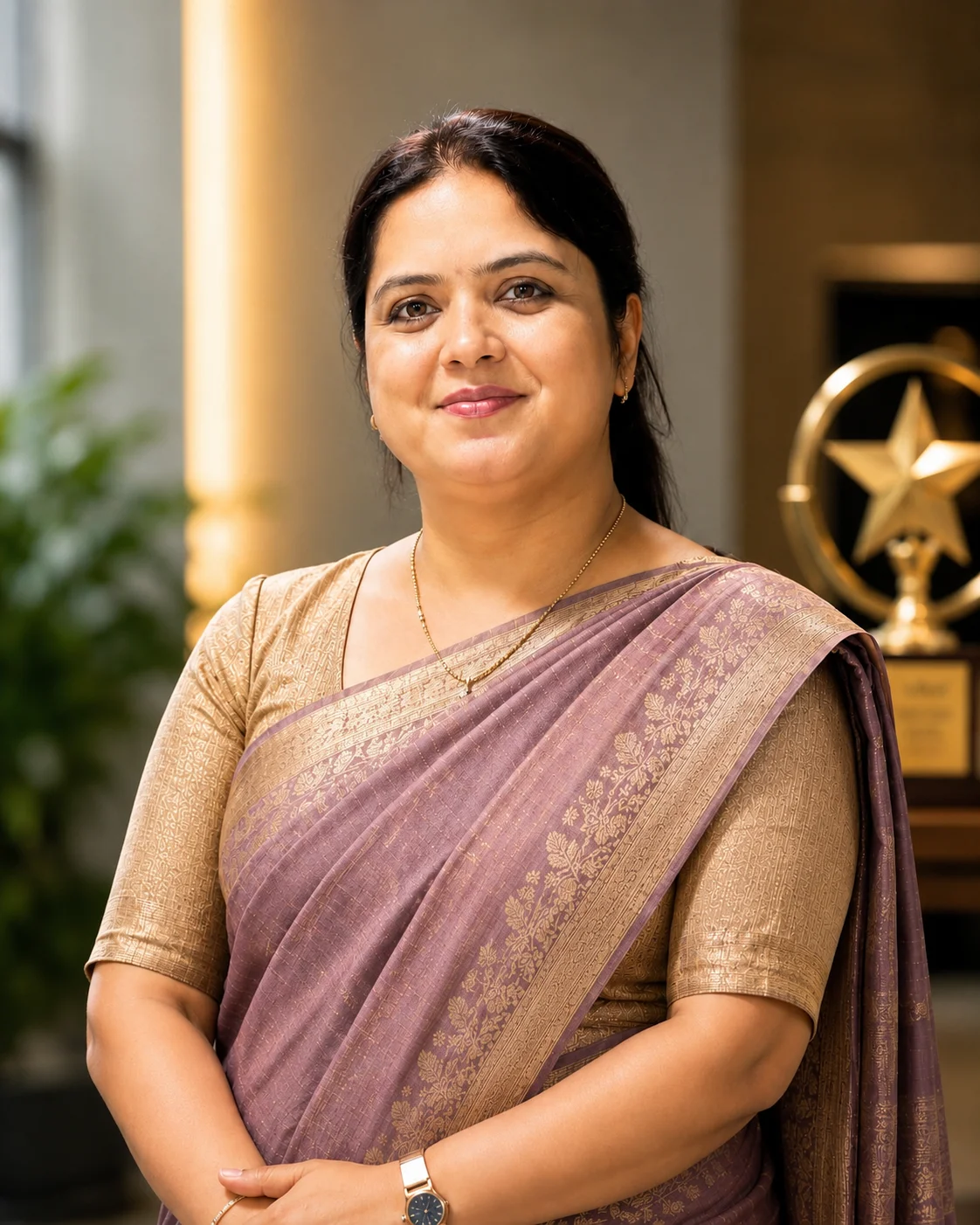
Nupur Chattopadhyay
Passionate Educator, Handwriting Specialist & Former School Principal
Specializes in Academic Math, Vedic Math, Mental Math, and Handwriting — with students across 6 countries.
Ready to Transform Your Child's Math Skills?
Join 1000+ students who've built confidence and excellence with Nupur Chattopadhyay.
Academic Mathematics — Common Questions
What does online maths tuition cost?+
The trial class is free — a full 60-minute live session, no payment and no card details. Fees are discussed after it, once Nupur has seen your child work and knows what's actually needed. A student who needs one gap closed is a different plan from one rebuilding two years of fundamentals.
Which boards do you cover?+
CBSE, ICSE and State Boards for Classes 1 to 8. The syllabus your child follows at school is what gets taught — we work from their textbook and their school's question patterns rather than a generic curriculum.
Is it 1-on-1 or group classes?+
1-on-1 by default, which is the point of the format — the sessions adapt to where your child is rather than to a batch average. Small group classes are possible if you would prefer that, usually with siblings or friends at a similar level.
My child is two classes behind in maths. Where do you start?+
At the gap, not at their current class. There is no point teaching Class 7 algebra to a child who is unsure about fractions — it produces memorised procedures that collapse under a slightly different question. The trial session identifies how far back the real gap goes, and you get an honest assessment of how long closing it will take.
How often are the classes?+
Two live sessions per week, with practice work between them. That cadence is deliberate: enough contact to keep momentum, enough gap for independent practice, which is where the learning actually consolidates.
Do you help with school homework?+
Homework gets used as diagnostic material rather than being done together — what your child struggles with in homework tells us what the next session needs to cover. The aim is a child who can finish their own homework unaided, which doesn't happen if someone walks them through it every evening.