Online Vedic Maths Classes for Kids
Live, interactive Vedic maths classes for Grades 1–8 — taught online, so calculation stops being the reason maths feels hard.
Format
Live 1-on-1 on Zoom
Session
60 minutes
Frequency
2 classes / week
Classes
1–8
What are Vedic maths classes?
Vedic maths is a set of calculation methods drawn from sixteen sutras — short rules that replace long arithmetic with far shorter routes to the same answer. A Vedic maths class teaches those methods and then drills them until a child can run them mentally: multiplying two-digit numbers without writing a single intermediate step, squaring numbers ending in five on sight, checking a division in seconds. It is not a replacement for school mathematics and it does not teach new concepts. It makes the arithmetic underneath the concepts fast and reliable, which is usually what stands between a child and full marks.
Which age is best to start Vedic maths?
Grades 3 to 6 is the sweet spot. By Grade 3 a child knows their tables and the four operations well enough for shortcuts to make sense rather than confuse, and they haven't yet built up years of slow habits. Younger students in Grades 1 and 2 can start on the foundation work — number sense, complements, the ten-point circle — while older students in Grades 7 and 8 often progress fastest of all, because they can see immediately how much time each technique saves them in a test. The free trial establishes where your child actually is before anything is scheduled.
Will it clash with the method taught at school?
No, and this is the most common worry parents raise. Vedic techniques are a faster route to the same answer, not a different answer. Children are taught to show school working where the school requires it, and to use the Vedic method to reach the result quickly and to check it. In practice the second use matters more than the first — a child who can verify an answer in five seconds catches their own mistakes before the examiner does.
Starting from scratch
No prior exposure is assumed. The course opens with the foundation sutras and the Vedic number system, then moves through multiplication, division, squares, roots and algebra shortcuts in sequence. Each technique is taught, demonstrated on problems from your child's own syllabus, then practised under time until it becomes automatic. Children who describe themselves as bad at maths tend to do well here, because the wins are immediate and visible.
Vedic maths, abacus and mental maths — what's the difference?
Parents often compare these three, and they are genuinely different things. This is the honest version.
| Vedic maths | Abacus | Mental maths | |
|---|---|---|---|
| What it teaches | Sutra-based shortcuts for arithmetic and algebra | Bead-frame technique, later visualised mentally | General number sense and calculation practice |
| Best starting age | Grades 3–6 | Ages 5–12, earlier is better | Any age |
| Tool needed | None — pen and paper | A physical abacus | None |
| Carries into higher classes | Yes — algebra and roots techniques apply through school | Fades once the visualisation is dropped | Yes, but without a specific method |
| Typical commitment | A few months | Two to three years across levels | Ongoing |
Designed for Real Results
Students in Grades 1 to 8 who want to calculate faster, build math confidence, and develop a love for numbers through proven techniques.
Solve calculations faster using proven shortcut techniques
Master arithmetic shortcuts for all four operations
Build lasting speed, accuracy, and confidence in math
Curriculum
What Your Child Will Learn
6 core modules covering the complete syllabus for Grades 1–8 — taught through live interactive sessions.
Foundation Sutras
Introduction to the Vedic Sutras and their practical applications
High-Speed Multiplication
Vertically & Crosswise, Nikhilam, and other multiplication shortcuts
Quick Division & Squares
Division shortcuts and squaring techniques
Square & Cube Roots
Finding roots mentally using Vedic techniques
Algebra Shortcuts
Solving equations using shortcut methods
Timed Practice & Drills
Building speed and accuracy through structured practice
How the Classes Work
Live Online Classes
2 interactive sessions per week with Nupur Chattopadhyay. Students see, hear, and solve problems in real-time — just like a physical classroom, but from home.
Practice & Feedback
Targeted worksheets after every class. Nupur personally reviews progress and gives individual feedback to every student.
Track & Improve
Regular assessments track progress. Parents get updates on strengths, improvement areas, and exam readiness.
Interested in this course for your child?
Try a live class free — no payment, no obligation. See the teaching style before you decide.
- ✓ Fast calculation techniques
- ✓ Shortcut methods for arithmetic
- ✓ Improves speed, accuracy, and confidence
Questions? Reach us on WhatsApp or email anytime.
Learn from the Best
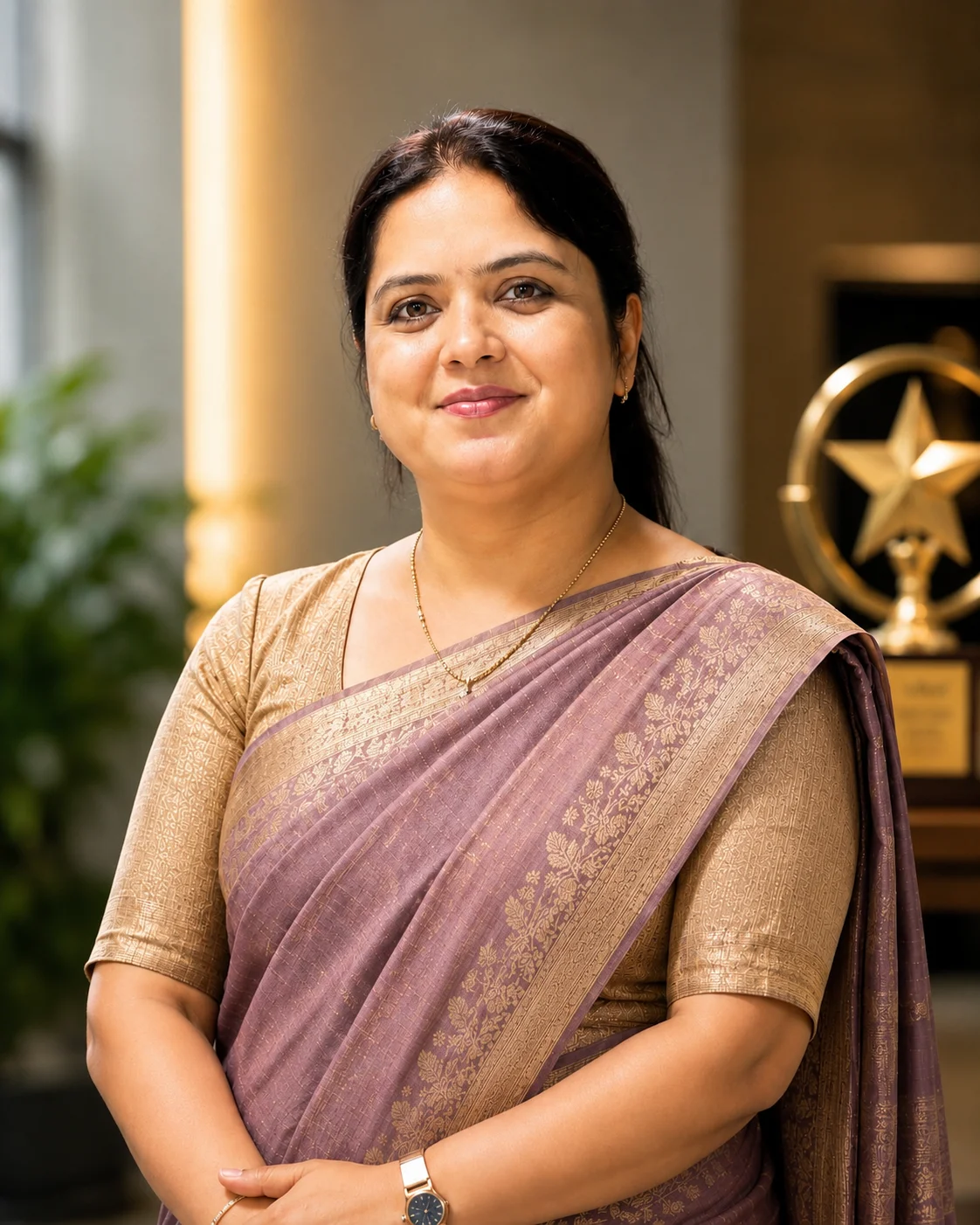
Nupur Chattopadhyay
Passionate Educator, Handwriting Specialist & Former School Principal
Specializes in Academic Math, Vedic Math, Mental Math, and Handwriting — with students across 6 countries.
Ready to Transform Your Child's Math Skills?
Join 1000+ students who've built confidence and excellence with Nupur Chattopadhyay.
Vedic Mathematics — Common Questions
What do online Vedic maths classes cost?+
The trial class is free — a full 60-minute live session with no payment and no card details taken. Fees are discussed after it, once Nupur has seen where your child is and how much ground they need to cover. A Grade 7 student who already calculates well needs a different plan from a Grade 3 student starting from tables, and quoting one price before seeing the work would be guesswork.
Which age is best for Vedic maths?+
Grades 3 to 6 is the strongest window — old enough for shortcuts to make sense, young enough that slow habits haven't set. Grades 1 and 2 can begin with foundation number work, and Grades 7 and 8 often move fastest because the time saved in exams is immediately obvious to them.
Are the classes live or recorded?+
Live on Zoom with Nupur, two interactive sessions a week. Vedic maths in particular needs live teaching — the entire skill is choosing the right technique for the number in front of you, and that judgement is built by working problems with a teacher watching, not by following a video.
Is an app or a free online course enough?+
Apps and free video courses are genuinely useful for drilling a technique you have already been taught. What they don't do is watch your child choose the wrong method and correct the reasoning, or adapt the sequence when something isn't landing. Most children who arrive here have already tried an app — they know a few tricks and can't yet apply them under exam pressure.
Do you offer a certificate?+
Yes, a certificate of completion at the end of the programme. It's a nice thing for a child to have, but it isn't the point — the measurable outcome is calculation speed and accuracy in school tests.
My child says they're bad at maths. Is this the wrong course?+
It's often exactly the right one. "Bad at maths" usually means slow and error-prone at arithmetic, which a child reads as a verdict on their ability. Techniques that produce fast, correct answers change that self-assessment quickly, and confidence tends to carry back into the parts of maths that were never the problem.